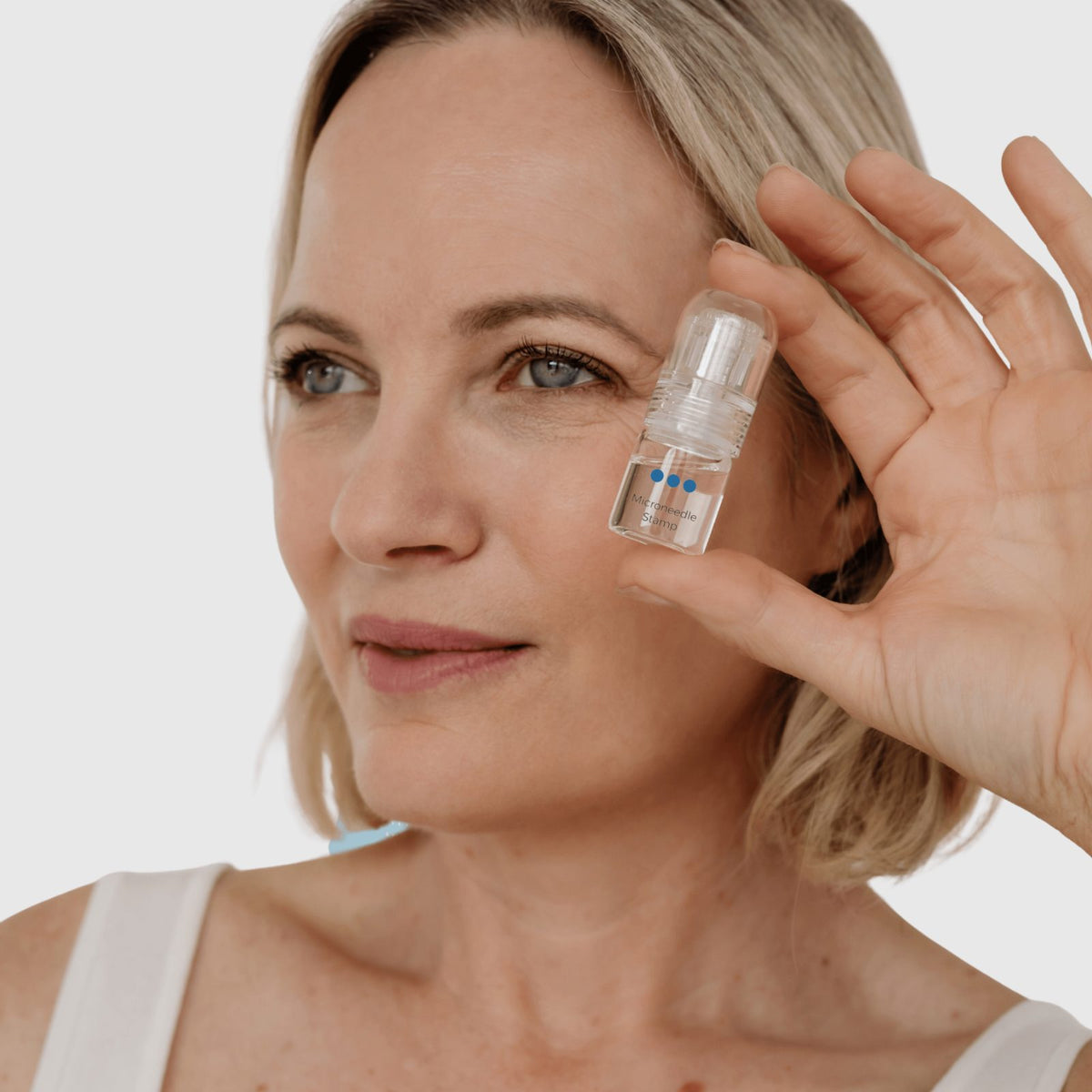



Scroll through skincare content for more than five minutes and you'll see someone gliding a small device across their face, talking about glow, texture and "infusion." Microneedling infusion has become one of the most searched skincare terms of the year and for good reason. It sits right at the intersection of two things people want most, visible results and a routine they can actually keep up with at home.
If you've been wondering what microneedling infusion actually means, whether it's the same as microneedling and why microneedling at home has become such a fixture in people's routines, here's the full picture.

What Is Microneedling Infusion?
Microneedling infusion (often just called micro infusion) uses a device covered in very fine, shallow needles to create temporary micro channels in the top layer of skin. Those channels do two things at once, they gently prompt the skin's natural renewal process and they open a brief window where serums and actives can absorb far more effectively than they would sitting on the surface alone.
That second part is where the word "infusion" comes from. You're not just needling the skin, you're using that moment to infuse it with whatever serum you're working with whether that's hyaluronic acid for hydration, peptides for firmness or a targeted treatment serum.
Micro Infusion vs Microneedling: What's Actually Different
This is where a lot of confusion sits and it's worth clearing up before you buy a device or book a treatment. Traditional microneedling, the kind performed in a clinic, typically works at greater depths of up to 2mm reaching into the dermis where it can trigger a stronger structural response from the skin and is a more intensive treatment and is performed by a skin professional.
Micro infusion works at a shallower level, focused on the upper skin layers. It's designed for consistent use which is exactly why it's become the favourite of choice for microneedling at home. Rather than one intense session followed by recovery time it's built into a regular routine. Put simply, microneedling goes deep and micro infusion goes shallow and consistent. Neither replaces the other, they're just built for different purposes and different settings.
Why Microneedling at Home Has Become So Popular
A few things have lined up at once, people want clinic quality skincare without clinic pricing or having to find the time to visit a clinic. Devices have genuinely improved a lot in recent years with finer needles and better safety design than the derma rollers of a few years ago. Microneedling at home fits that mood and you're not guessing whether a serum will "sink in" you're guaranteeing up to 200% more absorption and it's on your own schedule, in your own bathroom.
Its quick and easy to do at night in front of the TV and then the next morning waking up with super plump skin.
What Micro Infusion Can Help With
Used consistently, microneedling at home is commonly used to support:
- Smoother, more even texture, as the skin's surface renews itself more regularly.
- Better serum absorption, since active ingredients have a more direct path rather than sitting on top of the skin barrier.
- A brighter, more refreshed look to the skin over time, particularly when paired with a hydrating or brightening serum.
- A more visibly firm and plump appearance with continued use.
It's worth highlighting this treatment requires consistency, there is not overnight results. Most people notice a difference in texture and glow within the first few weeks with more meaningful change building over six or more weeks of regular use.
Getting the Basics Right
A few things matter more than people expect when it comes to microneedling at home.
Start on clean, dry skin, and always use a device on an area free of active breakouts, cuts, or irritation. Make sure you have a device that is dispoable so only one time use and don't share it with anyone else, for the same reason you wouldn't share a toothbrush. One session a fortnight is a common starting point rather than once per week.
At-home devices are designed with far shorter needle lengths 0.5mm than what's used in professional treatments which is the main reason microneedling at home can be safely performed. If you're chasing a deeper structural change or concern like significant scarring or laxity, that's a conversation for a skin professional and a clinical-grade treatment, not a home device.

Choosing a Microneedling Infusion Tool
Not every device on the market is built the same and this is one area where it pays to look past the price tag. Look for a device that has all elements disposable for hygiene, well-manufactured needle tips, clear guidance on how deep and how often to use it and a design that's genuinely comfortable to hold and control across the contours of your face.
Trudermal's Microneedling Infusion Kit was built with exactly this in mind, giving you a clinic-informed approach to microneedling at home without needing a clinic appointment. It's designed to work alongside your existing serums so infusion becomes part of your routine rather than an extra step you have to think about.
The Bottom Line
Microneedling infusion isn't a trend that showed up out of nowhere it's just been made accessible at home and is a technique the skin industry has trusted for years, adapted specifically for home use. If you're curious about microneedling at home the honest answer is that it works best as a habit, not a one-off. Give it a few consistent weeks and let the results build the way skin renewal actually happens.
FAQ- Have your questions answered...
Why does Trudermal use a 24K gold spring-loaded stamp?
Our Microneedling Infusion Kit features a patented 24K gold spring loaded stamping system designed to deliver a precise and even treatment across the skin. Unlike traditional rollers that drag across the surface, the stamping motion creates controlled micro-channels while helping minimise unnecessary skin trauma. The result is a gentler treatment with more consistent serum infusion.
Why is 600 microns the ideal depth for at-home treatments?
Our 600-micron depth has been carefully selected to create effective micro-channels that support your skin's natural renewal process while remaining suitable for at-home use when used as directed. It strikes the balance between delivering visible results and providing a comfortable treatment experience.
Why are sterile single-use treatment heads important?
Your skin deserves the highest level of hygiene. Using a fresh, sterile treatment head for every session helps reduce the risk of contamination, keeps your treatment hygienic and ensures the needles remain sharp for a comfortable, effective experience.
How does micro-infusion improve serum absorption?
Micro-infusion creates tiny, controlled micro-channels in the skin that allow active ingredients to penetrate more effectively than applying skincare to the surface alone. This helps maximise the absorption of the peptide-rich serum, leaving your skin feeling deeply hydrated, smoother and more radiant after each treatment.
Does it hurt and will my skin bleed?
Most people describe it as a light scratching or prickling sensation rather than pain, especially at the shorter needle lengths used for home devices. Some pinpoint redness afterwards is normal and usually settles within a few hours. Visible bleeding isn't typical at home needle depths and if you're seeing more than faint redness, that's usually a sign to ease off pressure or frequency rather than push through it.
How often should I microneedle at home?
Because home devices work at a shallower depth, they're suited to once a fortnight. Your skin needs time between sessions to repair and rebuild collagen and microneedling too often doesn't speed that process up, it just keeps the skin in a state of irritation instead of letting it do the repair work the treatment is meant to trigger.
How long before I actually see results?
Microneedling works by encouraging new collagen production and collagen remodelling is a slow biological process which generally takes three to six months to show its full effect. You might notice your skin looking a bit brighter or smoother within the first few weeks, but the deeper changes people are usually chasing for firmer skin build gradually with consistent use rather than arriving after one or two sessions.
Can I use micro-infusion on my neck and décolletage?
Yes. Your neck and décolletage are often among the first areas to show visible signs of ageing. Micro-infusion can be used on these areas to help improve the appearance of fine lines, skin texture and hydration, leaving your skin looking smoother and more refreshed.
Who shouldn't try microneedling at home?
Anyone with active acne, eczema, psoriasis, rosacea flare ups or broken skin should hold off since microneedling can aggravate all of these. It's also not the right time if you've recently had sunburn or any other skin injury in the area. If you're pregnant, on certain acne medications or unsure whether a skin condition you have rules it out, checking with a dermatologist or skin therapist first is the safer move before adding it to your routine.